How to Build Consistent Archery Practice Beyond the Indoor Range
Choose before you draw: will you take only shots you can repeat calmly, or let distance, excitement or a narrow opportunity change your standard? That decision connects target practice to ethical bowhunting. A useful routine does more than tighten indoor groups. It helps you inspect equipment, recognize when conditions exceed your ability and build consistency on uneven footing, changing angles and imperfect timing.
Start with a field decision, not a target score
A paper bullseye gives clear feedback, but a hunting opportunity asks a different question: can you place an arrow accurately enough, under the current conditions, to make a responsible shot? Consider your practiced distance, body position, visibility, wind, animal movement, backstop and confidence in the shot.
Set a personal limit before practice becomes emotionally charged. It might involve distance, steep angles, reduced light, strong wind or an obstructed lane. The boundary should reflect repeatable results rather than optimism. If your form breaks down when you kneel, turn or hold at full draw, those positions belong in training before they belong in the field.
An ethical shot decision includes the decision not to shoot. If the animal is moving unpredictably, the target area is partly hidden or you cannot identify what lies beyond it, let the opportunity pass. Patience is part of competent bowhunting.
Turn repetitions into deliberate practice
Shooting many arrows can create familiarity without improvement. Give each short session one purpose, such as maintaining a relaxed bow hand, reaching the same anchor or executing a clean follow-through.
Begin with a manageable number of arrows and shoot at a distance where mistakes are visible without forcing fatigue. After each end, ask a specific question: Did the draw feel rushed? Did the bow arm collapse? Did the release surprise you? Useful notes describe an action or sensation rather than simply labeling an arrow "bad."
Once the movement feels stable, add a decision element. Vary the target face, change your starting position or pause briefly before drawing. Rehearse checking the lane, setting your feet, breathing, drawing smoothly and deciding whether to continue. The goal is to repeat a process when each repetition differs slightly, not to create theatrical pressure.
Stop when fatigue changes your form enough to teach the wrong pattern. Consistency comes from quality repetitions, not from proving how long you can continue.
Add the awkward positions the range hides
A flat indoor lane can conceal problems that appear outdoors. Uneven ground changes balance, steep uphill or downhill angles alter posture, and heavy clothing may affect the string path, anchor or ability to reach the same reference point.
Practice these variables gradually and safely. Use a stable, known target setup, keep the lane clear and do not add a difficult position merely for novelty. If you cannot maintain alignment and a controlled follow-through, reduce the angle or distance. When the process degrades, adjust rather than insist.
Movement deserves attention too. A hunting draw may begin with your torso turned, feet offset or bow partly hidden by natural cover. Practice only in a setup that keeps you in control and does not encourage unsafe handling. The purpose is to make a sound routine available when an opportunity is not perfectly arranged.
Inspect the system before it earns your trust
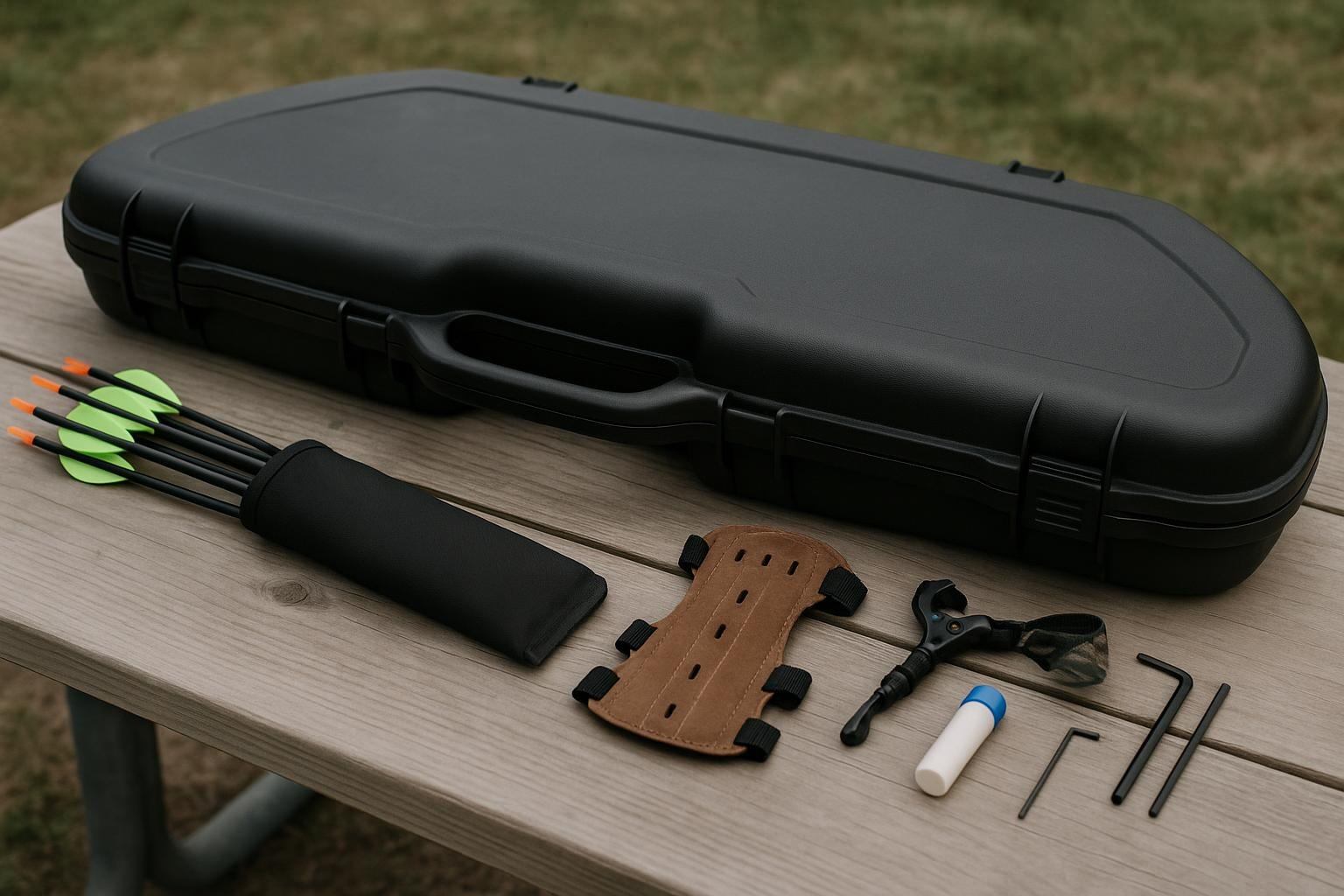
A reliable practice plan includes equipment inspection. Before a session, examine the bow, string and cables for unusual wear, fraying, separation or damage. Check that accessories are secure and that arrows are straight, undamaged and correctly matched to the setup. Inspect nocks, inserts, fletching and broadheads; a small defect can affect flight or create a safety problem.
Do not attempt improvised repairs or modifications when you are unsure what a component requires. Use the equipment maker's current instructions or consult a qualified archery technician. After changing a sight, rest, draw setting or other part of the setup, confirm the result at a safe target before relying on it for hunting.
A short pre-session check should include:
– Inspecting the bow, string, cables, fasteners and accessories.
– Examining every arrow for cracks, bends, loose parts or damaged fletching.
– Confirming that the target and backstop suit the arrow and draw weight.
– Shooting a few controlled arrows and stopping if sound, feel or flight changes unexpectedly.
This is not busywork. If something feels different, investigate before increasing distance or adding a broadhead.
Rehearse the shot you are willing to take
Practice should make ethical decisions easier to recognize, not make you feel obligated to shoot. Include pauses in which you name the conditions that would make you lower the bow: an unclear target area, poor angle, excessive distance, unstable footing, a moving animal or uncertain identification.
For hunting practice, use realistic but controlled scenarios. Start at a known distance, then vary the angle or stance one factor at a time. Afterward, decide whether the shot met your preset standard. If it did not, record why. A missed standard is useful when it leads to a change in training.
Do not let a successful hit erase a poor process. One good arrow can result from timing or luck; a sound routine provides evidence you can trust.
Verify the rules before heading out
Skill does not replace legal preparation. Local hunting regulations may govern seasons, permitted equipment, licensing, tag requirements, legal shooting hours, hunter education, minimum distances and where bowhunting is allowed. Requirements can change and may differ between nearby jurisdictions or species.
Check current guidance from the responsible official wildlife or land-management authority before the season and again when planning a specific trip. Confirm that your equipment and intended method comply with the rules where you will hunt. Property permission, access restrictions and local closures may also matter when your equipment is otherwise legal.
Keep this verification separate from assumptions carried over from a previous season. Practice can prepare your body and judgment, but only current official information establishes what is lawful. The strongest field plan ends with the standard it began with: take the shot only when the conditions, equipment, skill and rules all support it.
Copyright © 2026 - bullmtnarchery.com. All Rights Reserved.